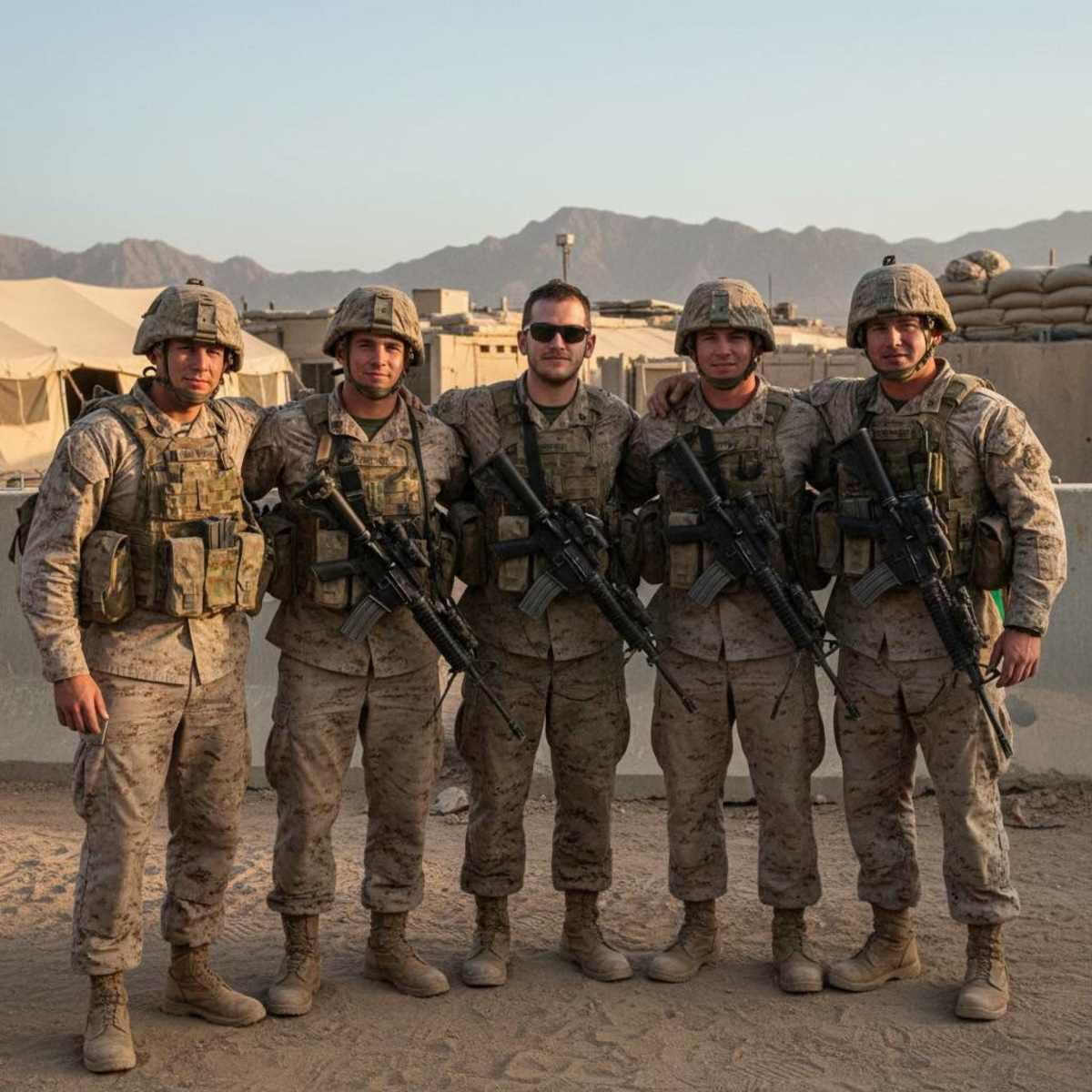
There are names you never forget.
It doesn’t matter how much time passes, how many birthdays come and go, or how much life changes afterward. Some people stay with you permanently. Their voices linger in old memories. Their mannerisms show up in random moments. Sometimes you’ll hear a laugh across a crowded room that sounds close enough to theirs to stop you in your tracks for half a second before reality settles back in.
Losing Marines is something hard to explain to people who haven’t lived in that kind of environment. From the outside, people understand the idea of military brotherhood in theory. They hear phrases like “tight-knit unit” or “band of brothers,” but deployment compresses human relationships in a way civilian life rarely does. You eat together, sweat together, suffer together, and depend on each other in ways that become instinctive. These aren’t coworkers you see for eight hours a day. These are the people standing next to you in places where mistakes get people killed.
That kind of closeness changes loss into something heavier than grief alone.
Before deployment, most people imagine death in combat as some dramatic movie moment. Flags waving. Heroic speeches. Last words that somehow sound meaningful and complete. The reality is usually much messier. Sometimes it’s sudden and chaotic. Sometimes there’s screaming. Sometimes there’s terrifying silence. Sometimes there’s so much adrenaline moving through your body that your brain refuses to fully process what’s happening until much later.
As a corpsman, that weight can hit differently. When someone gets hurt, your body moves before your mind does. Training takes over. Your hands work automatically—tourniquets, airway management, chest seals, pressure, medications, radios crackling in the background. You narrow your world down to one task: keep this person alive long enough to get them home.
And sometimes, despite everything you do, you can’t.
That’s the part nobody prepares you for. Not really.
People talk a lot about survivor’s guilt, but they don’t always explain how personal it becomes. You replay moments over and over in your head. What if I had moved faster? What if I’d caught something earlier? What if I’d made a different call? Even when logic tells you there was nothing more you could have done, emotion rarely listens. The brain becomes its own interrogation room.
What hurts almost as much as the loss itself are the small details that survive afterward. The empty rack. The gear packed into boxes. The nickname nobody says anymore because hearing it out loud hurts too much. A favorite song coming on unexpectedly months later. Someone making the exact same joke they used to make, only for the laughter to die halfway through because everyone suddenly remembers who’s missing.
There’s also a strange cruelty in how normal the world keeps moving afterward. Emails still come in. Vehicles still need maintenance. People still complain about small inconveniences. Meanwhile, part of your world has stopped completely. You can feel disconnected from everyone around you because they’re carrying on normally while you’re quietly trying to process the fact that someone you loved is gone forever.
Coming home doesn’t make it easier either.
For many veterans, the losses don’t fully settle in until after deployment ends. Overseas, there’s always another mission, another patrol, another task demanding your focus. Back home, the silence leaves room for memory. That’s when faces start appearing in dreams. That’s when random moments hit hardest—standing in a grocery store, hearing a certain phrase, smelling cigarette smoke or diesel fuel and suddenly being right back there mentally.
A lot of veterans carry guilt over forgetting small things. Maybe a voice fades over time. Maybe you can’t remember someone’s exact laugh anymore. That guilt can feel crushing, like losing pieces of them all over again. But grief doesn’t mean you loved them less. It means you’re human.
The truth is that losing Marines changes you permanently. There’s a before and after to it. Some people become quieter afterward. Some become angrier. Some throw themselves into work because staying busy feels safer than sitting alone with memory. Others isolate themselves completely because it feels impossible to explain the loss to people who didn’t know them.
But there’s another side to it too.
The Marines we lose don’t just leave behind pain. They leave behind pieces of themselves in the people who survive them. Their humor. Their habits. Their lessons. The way they carried themselves under pressure. The things they believed in. Sometimes you catch yourself repeating advice someone gave you years ago and realize they’re still shaping the person you became.
I think that’s part of why we talk about them the way we do. Why we tell stories, even the funny ones. Why we remember the dumb things they said, the music they played, the way they acted when nobody important was watching. We keep them alive in conversation because the alternative feels too much like letting them disappear.
And they deserve better than that.
Losing Marines taught me something painful but important: grief is the price of loving people deeply in places built around danger. None of us would choose that pain willingly. But if given the choice, most of us would still choose the brotherhood that caused it.
Because even now, years later, I’d rather carry the weight of remembering them than live in a world where they were never there at all.