Blog

One of the cruelest parts of PTSD is that even when your body is exhausted, your brain often refuses to let you rest.

People who haven’t experienced it sometimes think insomnia just means “having trouble sleeping.” PTSD insomnia is different. It’s not simply lying awake because you drank too much caffeine or your mind is busy. It’s your nervous system staying locked in survival mode long after the danger is gone. It’s being bone-deep tired while your body still acts like it needs to stay awake...
PTSD is exhausting in ways that are hard to explain to people who haven’t lived with it.

Most people think of PTSD as just “bad memories” or nightmares, but it’s so much bigger than that. It’s your nervous system getting stuck in survival mode long after the danger is gone. It’s your brain treating ordinary moments like threats because somewhere along the line it learned that relaxing wasn’t safe. It’s not something you simply “get over” because time passed.

For me, PTSD doesn’t always look...

Forced to Leave: What It Was Like Being Separated When I Wanted to Do 20

When I joined the military, I didn’t see it as a temporary chapter. I wasn’t counting the days until I got out. I wasn’t dreaming about civilian life or making backup plans for another career. In my mind, this was it. This was the path. I wanted the full twenty years. I wanted the deployments, the brotherhood, the exhaustion, the dark humor, the structure, the sense of purpose—all of it. I wanted to retire wearing the uniform.

So when I was separated against my will, it didn’t just feel like...

Why Being Stupid and Goofy Mattered on Deployment If you looked at most

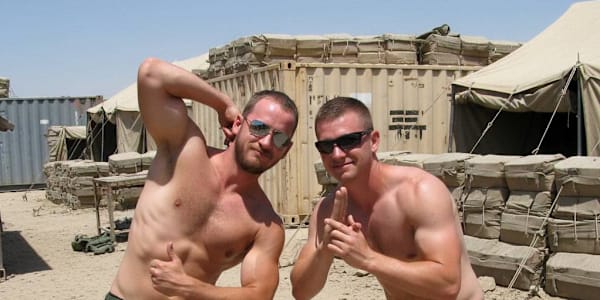
If you looked at most deployments from the outside, you’d probably expect everything to be serious all the time. People imagine nonstop tension, hard faces, perfectly disciplined troops moving through danger with movie-level intensity twenty-four hours a day. And sure, there were moments like that. There were patrols where everyone was locked in, radios crackling, eyes scanning rooftops and roadways like their lives depended on it—because they did.

But what most people don’t understand is that...

The Weight of Losing Marines There are names you never forget.It doesn’t

There are names you never forget.

It doesn’t matter how much time passes, how many birthdays come and go, or how much life changes afterward. Some people stay with you permanently. Their voices linger in old memories. Their mannerisms show up in random moments. Sometimes you’ll hear a laugh across a crowded room that sounds close enough to theirs to stop you in your tracks for half a second before reality settles back in.

Losing Marines is something hard to explain to people who haven’t lived...

People hear the words “traumatic brain injury” and often picture something dramatic and obvious—someone unconscious on the ground, helicopters overhead, a life instantly changed in a visible way. Sometimes it is like that. But a lot of the time, especially in military and law enforcement environments, TBIs happen fast, quietly, and in ways that don’t fully hit you until later.

One second, everything is normal. The next, there’s impact. A blast. A crash. A hard hit. Then comes the strange...

There’s a kind of humor that only really makes sense when you’ve lived in places where the stakes are high, the sleep is scarce, and the stress never fully lets up. To people on the outside, it can sound inappropriate, harsh, or even cruel. But for those who’ve deployed—especially in combat zones—dark humor isn’t about being heartless. More often than not, it’s about survival.

Deployment strips life down to its rawest form. You’re tired all the time. You’re dirty more often than you’re clean....

For a lot of veterans, PTSD can feel isolating in a way that’s hard to explain. You may be surrounded by people who care about you and still feel like no one fully understands what’s happening in your head. That’s where the right book can matter. Not because a book can “fix” trauma, but because the right words at the right time can make you feel less alone, help you understand what your brain is doing, and give you practical tools to start getting some ground under your feet again.

One of the...

If Hollywood has taught people anything about military medicine, it’s usually the wrong lessons. The screen version of a corpsman is often a fearless miracle worker who sprints through gunfire, dramatically saves everyone in thirty seconds, and somehow walks away untouched by what they’ve seen. It makes for good television. It just doesn’t look much like the reality.

The truth is that being a corpsman is a lot less cinematic and a lot more human. It’s not about cool one-liners, dramatic...

There are sounds that never really leave you. Even years later, there are moments when a slammed door, the smell of diesel, or the sharp metallic taste of dust in the wind can pull you right back to a place you thought you’d buried. For me, that place was Afghanistan. More specifically, it was the stretch of hard-packed roads, narrow wadis, and sun-bleached compounds where I served as a Navy corpsman attached to Marines who quickly became brothers.

Being a corpsman in Afghanistan was unlike...

When I started The Ledger of Survival, I didn’t do it with a plan for a series. I was trying to put something down before it slipped further away. The first book was about recording what happened without softening it, without shaping it into something easier to digest. Once it was finished, I realized there was more that hadn’t been written yet—not because it was forgotten, but because it hadn’t reached the surface.

The second book, Between the Wounded and the Living, comes from that...