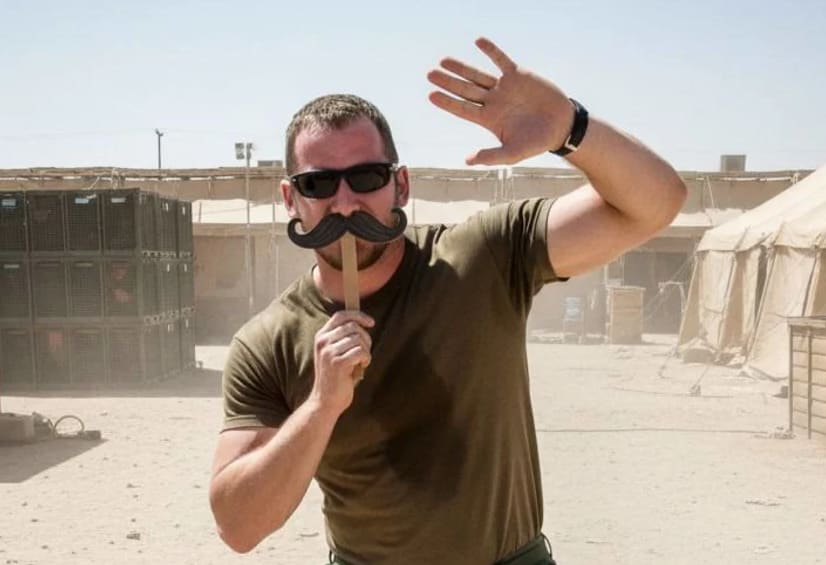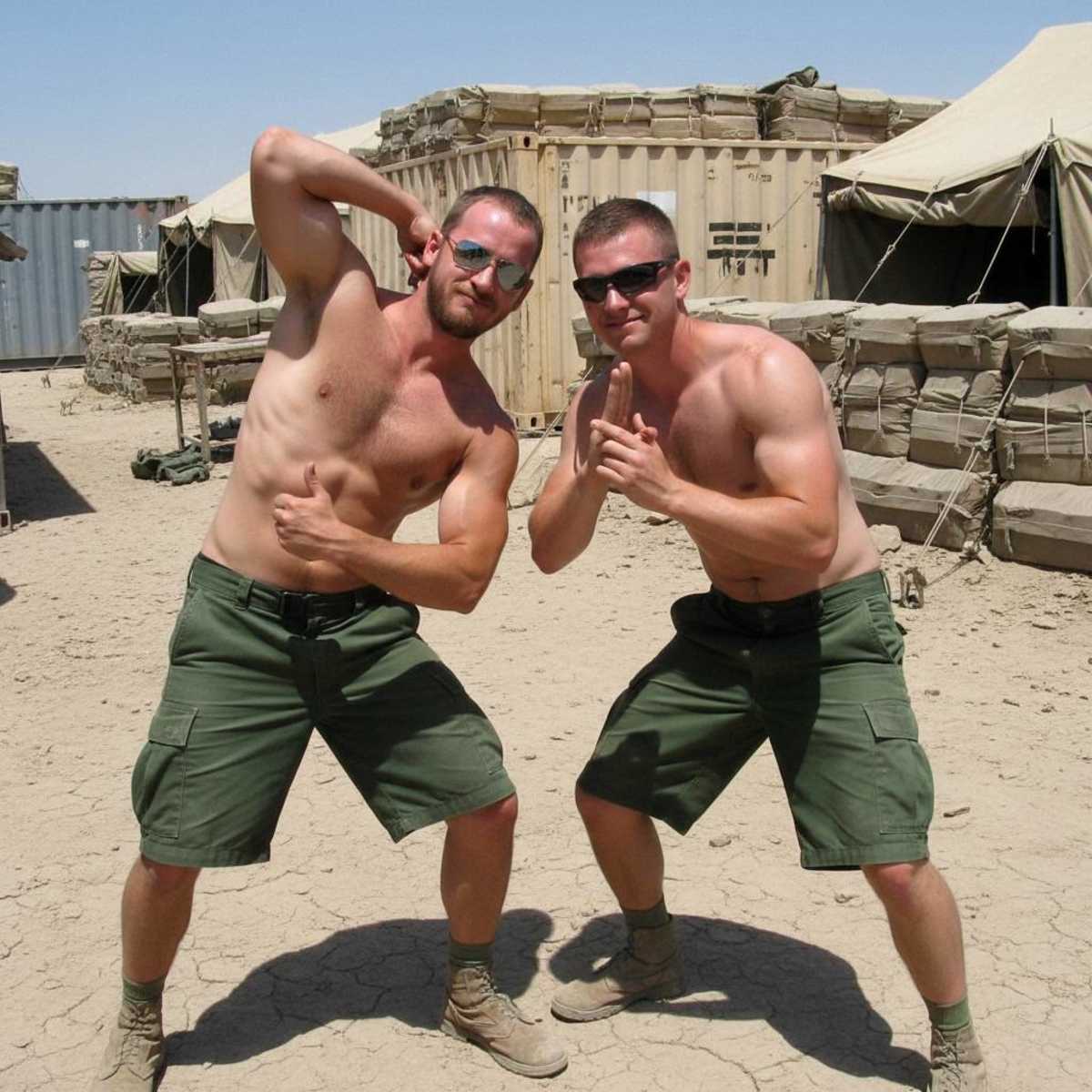
If you looked at most deployments from the outside, you’d probably expect everything to be serious all the time. People imagine nonstop tension, hard faces, perfectly disciplined troops moving through danger with movie-level intensity twenty-four hours a day. And sure, there were moments like that. There were patrols where everyone was locked in, radios crackling, eyes scanning rooftops and roadways like their lives depended on it—because they did.
But what most people don’t understand is that if you stay in that mindset constantly, it will break you.
That’s why being stupid mattered.
That’s why the dumb jokes, ridiculous games, pointless arguments, and complete nonsense became some of the most important parts of surviving deployment. It wasn’t immaturity. It wasn’t people failing to take things seriously. Most of the time, it was exactly the opposite. We acted goofy because the reality around us was serious enough already.
There’s something that happens to people under prolonged stress. Your world shrinks. You become hyper-alert all the time. Even during downtime, part of your brain stays switched on waiting for the next call, the next explosion, the next radio transmission that changes the mood instantly. Over time, that kind of tension starts eating at you. If you don’t find ways to release it, eventually it comes out somewhere else—usually not in healthy ways.
So Marines, sailors, soldiers, and corpsmen become experts at finding humor in absolutely anything.
I’ve seen grown men spend two straight hours arguing over whether a raccoon could beat a goose in a fight like it was a matter of national security. I’ve seen entire squads nearly collapse laughing because somebody tripped carrying chow and launched mashed potatoes across a tent. I’ve seen Marines create fake award ceremonies for the dumbest things imaginable just to break up the monotony. At one point, we became emotionally invested in a half-dead lizard that lived near the smoke pit like it was a beloved platoon mascot.
And honestly? That stupidity probably helped keep people alive mentally.
Those moments gave people permission to breathe again. For five minutes, you weren’t thinking about home, incoming rounds, patrol routes, or the fact that tomorrow wasn’t guaranteed. You were just laughing with your friends until your ribs hurt. In environments where stress becomes constant background noise, those moments of stupidity become emotional oxygen.
It also helped preserve identity.
Deployment has a way of reducing people down to function. You become your rank, your job, your weapon system, your responsibilities. Humor pushed back against that. It reminded us we were still human beings underneath the gear and body armor. The guy making terrible impressions in the tent wasn’t just a machine carrying ammo anymore—he was somebody’s son, somebody’s best friend, somebody who still knew how to laugh despite where we were.
A lot of the goofy behavior also came from pure boredom. People who’ve never deployed don’t always realize how much waiting is involved in military life. Waiting for missions. Waiting for flights. Waiting for briefings. Waiting for orders. Waiting for literally anything to happen. When you combine exhaustion, caffeine, nicotine, heat, and boredom, people start getting creative in increasingly questionable ways.
That’s how you end up with Marines trying to skateboard on broken plywood, creating underground gambling rings over UNO games, or holding fake press conferences about why someone violated the Geneva Convention against the coffee maker. Looking back, some of it sounds completely insane. At the time, it was survival.
And underneath all the stupidity was trust.
People don’t act truly goofy around people they don’t feel safe with. That kind of humor only happens when bonds get strong enough for everyone to lower the mask for a while. Those ridiculous moments built closeness in ways that serious conversations sometimes couldn’t. Shared laughter became part of the glue holding units together.
What’s funny is that years later, a lot of veterans remember those moments just as vividly as the serious ones. People remember firefights and losses, sure. But they also remember the Marine who accidentally stapled his glove to a table, the improvised gym equipment made from ammo cans, the midnight arguments about fast food restaurants nobody had seen in months, and the absolute chaos of sleep-deprived conversations at three in the morning.
Those memories matter because they remind us there was still life in the middle of all that stress.
I think civilians sometimes misunderstand military humor because they assume seriousness equals professionalism. But the truth is, some of the most professional, competent people I’ve ever known were also complete idiots when the moment allowed for it. They had to be. Nobody can carry that level of stress constantly without eventually cracking.
Being stupid and goofy wasn’t separate from surviving deployment. In a lot of ways, it was part of how we survived it at all.
Because sometimes the only thing standing between you and the weight of everything around you is one absolutely ridiculous joke shared with people you trust like family.